Introduction: As Hong Kong’s role as a data hub in the Asia-Pacific region grows, how its advanced data center management systems can ensure isolation in multi-tenant environments has become a key issue for operations and compliance. This article will analyze viable strategies from three aspects: technology, operations, and compliance, to help data centers and cloud service providers maintain security isolation and service continuity in multi-tenant environments.

Multi-tenant environments require isolation, performance, and regulatory compliance to be achieved simultaneously under shared infrastructure. Hong Kong’s emphasis on data sovereignty and privacy requires that data center management systems ensure clear isolation between tenants’ data, networks, and operational activities, while also guaranteeing auditability and compliance with Service Level Agreements (SLAs).
Technical implementation should adopt the principle of layered protection, isolating the physical, network, storage, and management planes separately. Hong Kong’s advanced computer room management systems typically use virtualization, secure partitions, and policy engines to ensure that even underlying shared resources can be logically isolated, thereby reducing the risks of side channels and unauthorized access.
Network isolation uses technologies such as VLANs, VRFs, SDN, and micro-segmentation to logically isolate tenant traffic at the Layer 2 or Layer 3 level. Combined with Software-Defined Networking (SDN), fine-grained policies can be dynamically deployed to meet Hong Kong enterprises’ dual needs for low latency and flexible policy control, while also facilitating centralized auditing and fault localization.
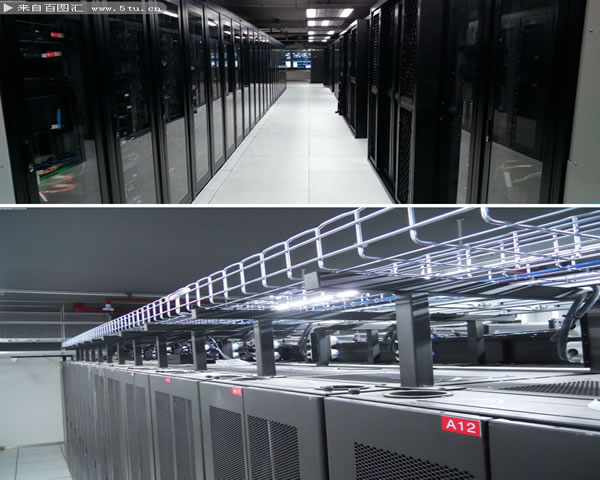
At the physical level, risks of physical sharing are reduced through partitioned cabinets, separate power supplies, and access control systems ; At the logical level, role-based access control (RBAC), the principle of least privilege, and multi-factor authentication are employed to ensure that operations by maintenance staff and tenants are controllable and auditable in terms of permissions and time windows, thereby reducing the risk of isolation failures caused by human errors.
Real-time monitoring and centralized logging are key to ensuring isolation. Hong Kong’s advanced data center management systems need to integrate traffic analysis, behavior analysis, and SIEM to provide cross-tenant visual monitoring and audit trails, in order to meet local regulations and international compliance requirements, as well as to support regular and on-demand generation of compliance reports.
Operations processes should protect isolation through standardization, automation, and change control. Fault drills, isolation testing, and incident response plans can verify the system’s ability to maintain tenant isolation in emergency situations. In the Hong Kong market, it is necessary to balance multilingual support with timely localization responses to enhance customer trust.
When deploying a computer room management system in Hong Kong, it is recommended to conduct a risk assessment and classification first, establish tenant isolation strategies, and gradually implement automation tools. By combining third-party assessments with regular red team testing, isolation strategies and monitoring rules are continuously optimized to address evolving threats and regulatory changes, ensuring long-term compliance and high availability.
Summary: Hong Kong’s advanced computer room management systems ensure isolation in multi-tenant environments by relying on layering technology, protection strategies, strict operations and maintenance, as well as comprehensive monitoring and auditing. It is recommended to adopt a risk-oriented approach that combines automation with compliance processes to continuously verify the effectiveness of isolation, ensuring security, compliance, and business continuity when sharing resources.
- Latest articles
- Quick Start Guide to Configuring CN2 Internet Access in Cambodia and Optimization Tips
- Why Online Games and Financial Transactions Prefer German Low-Latency Server Hosting
- Sharing migration solutions: The approach to moving Hong Kong-based IP servers from on-premises to the cloud
- Popular tags
-
precautions and suggestions for purchasing hong kong native ip
this article discusses the precautions and suggestions for purchasing hong kong native ip to help users better choose and use hong kong native ip. -

Functions and features of Hong Kong CN2 GIA high-speed node
Understand the functions and characteristics of Hong Kong CN2 GIA high-speed nodes and explore their important applications in data transmission and network connection. -

what is hong kong’s native ip mobile phone card? detailed introduction to usage scenarios and technical principles
this article introduces the definition, technical principles, typical usage scenarios, advantages and limitations of hong kong's native ip mobile phone cards, as well as purchase and compliance considerations, to help companies and individuals rationally evaluate and use them.